OSHA Basics for Environmental Cleanup Work: What Clients Should Expect on Site
Environmental cleanup is challenging work. Substances that are harmful to the environment are often also dangerous to humans, requiring careful safety protocols to prevent injuries and health risks. Sun Environmental Corp. prides itself on following best-in-class procedures for site safety. With convenient locations near you in Syracuse, Rochester, Albany, Buffalo, and Philadelphia, we are proud to serve many areas across Upstate New York including Central, Western, North Country, the Southern Tier and Capital Region, and in Pennsylvania we cover the greater Philadelphia region, including parts of New Jersey.
Learn more about OSHA requirements for environmental cleanup and how we go above and beyond for safety.
Key Takeaways
- Having a knowledgeable environmental partner that values safety will be evident in their approach on the job site and the documentation you receive once work is completed.
- Inadequate planning, minimal on-site safety controls, and scant documentation are all signs that corners are being cut regarding worksite safety.
- Thorough safety planning allows for a more efficient project with a controlled and predictable budget. Inadequate planning puts you at risk of unexpected expenses and delays. Strong partners in safety, like Sun Environmental Corp., can offer a spill agreement to help with pre-planning.
Why Is OSHA Compliance Important?
The Occupational Safety and Health Administration, commonly known as OSHA, is a government agency responsible for monitoring safety on job sites. It ensures that workers are protected from injuries, health risks, and other workplace hazards. OSHA regulations apply to every industry, including environmental remediation. Compliance is essential for a variety of reasons that support businesses and employees alike. Reasons OSHA compliance is important include:
- Risk mitigation: Environmental cleanup often involves working with materials that are toxic, corrosive, or reactive, making them dangerous if not handled properly.
- Liability avoidance: Inadequate OSHA compliance leads to liability issues that cost your company in fines, legal fees, medical coverage, and more.
- Reduce delays: OSHA compliance issues may also result in delays that slow down cleanup, potentially allowing contaminants to spread further in the meantime.
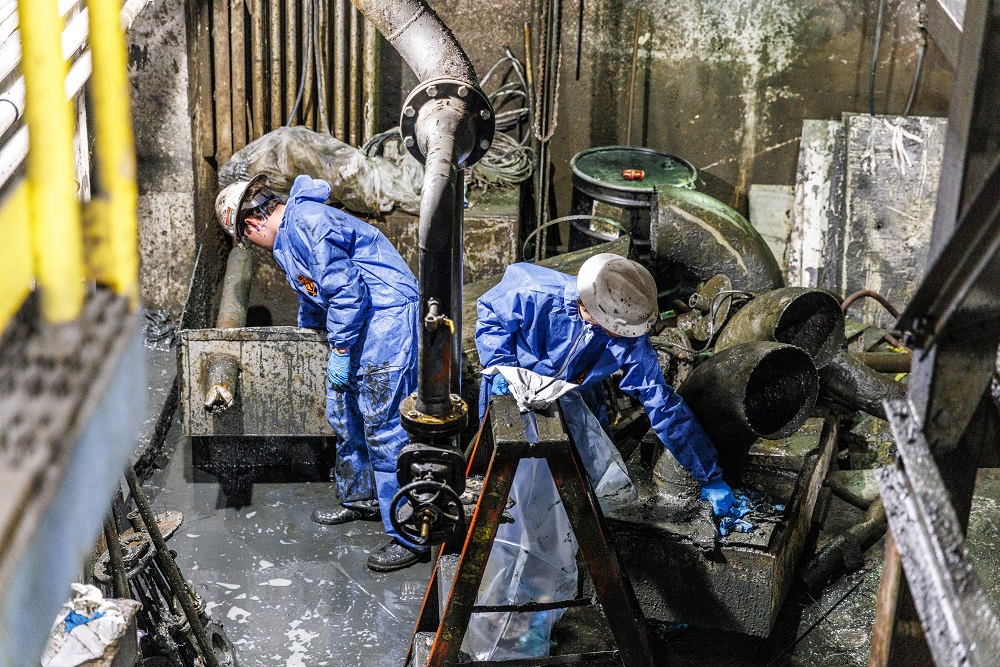
When it comes to environmental cleanup, OSHA compliance is not one-size-fits-all. Instead, requirements change based on your site conditions. Confined spaces, fumes, slick surfaces, chemical hazards, and other dangers each require a different approach to handle them safely. Complete compliance involves evaluating the site and applying the correct safety practices for your situation.
This variability has resulted in some variety in how remediation contractors uphold OSHA standards. Many companies perform the bare minimum to comply with regulations. Best-in-class companies, on the other hand, go above and beyond. Sun Environmental Corp. exceeds safety standards because we understand they are about more than just avoiding fines. When personal health and the environment are at stake, we aim to minimize risks in every way possible.
Pre-Job Safety Planning
The first and most important part of OSHA compliance is planning. To be fully protected in hazardous conditions, our employees must be prepared with the information, instructions, tools, and training to stay safe. Here, we outline our pre-job planning process:
Job Hazard Analysis (JHA)
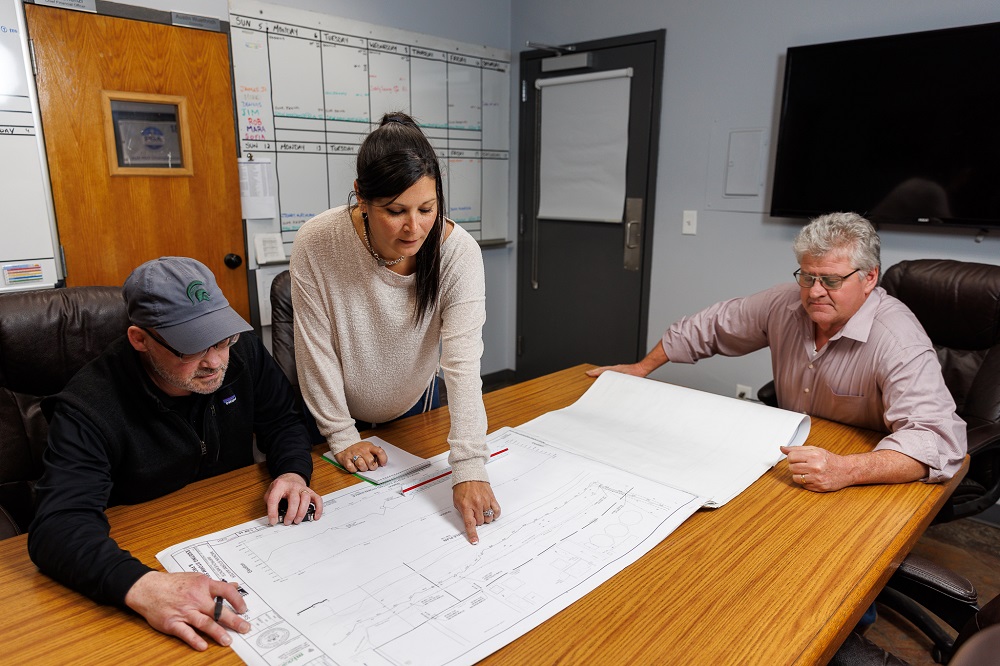
A job hazard analysis, or JHA, is a risk assessment tool that is used to identify potential workplace hazards. To create a JHA, we perform a scope walkdown to observe the site directly and accurately define the scope of the project. We then break down the job into individual tasks and evaluate the risks associated with each step, creating a full analysis of potential hazards.
Site Safety Plan
After completing the JHA, we develop a Health and Safety Plan (HASP). An effective HASP identifies and outlines the necessary safety controls to eliminate or mitigate each hazard. We turn this analysis into a comprehensive document specific to your site, ensuring that every worker who participates in the cleanup project is informed of the risks and necessary prevention measures.
Training Expectations
To implement HASPs effectively, our employees are rigorously trained in worksite safety protocols. This includes Hazardous Waste Operations and Emergency Response (HAZWOPER) standards, which are OSHA’s health and safety requirements for workers engaged in hazardous material cleanup. Effective training ensures that workers are equipped to handle work hazards safely.
On-Site Controls You Should See
Once we have developed a satisfactory safety plan, it’s time to implement our measures. Complete OSHA compliance requires multiple types of safety controls applied at every job site. When we handle your cleanup, look for the following controls:
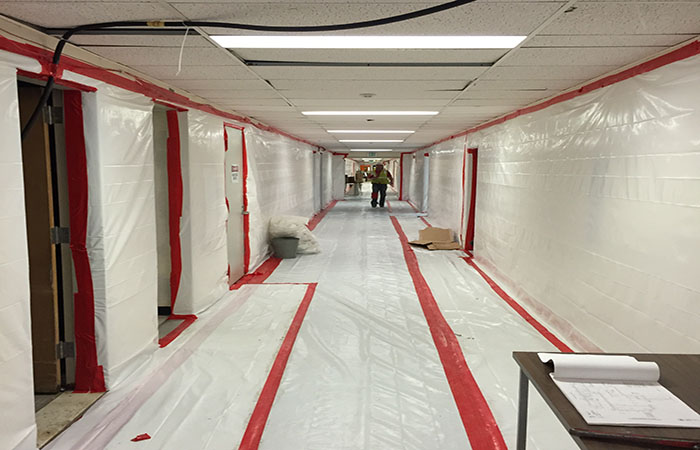
- Access control: We block off work zones and control who has access to them, keeping out everyone but trained employees with the appropriate personal protective equipment (PPE).
- Signage: Clearly visible signage warns people away from hazardous areas and reminds workers not to enter the work zone without PPE and other precautions.
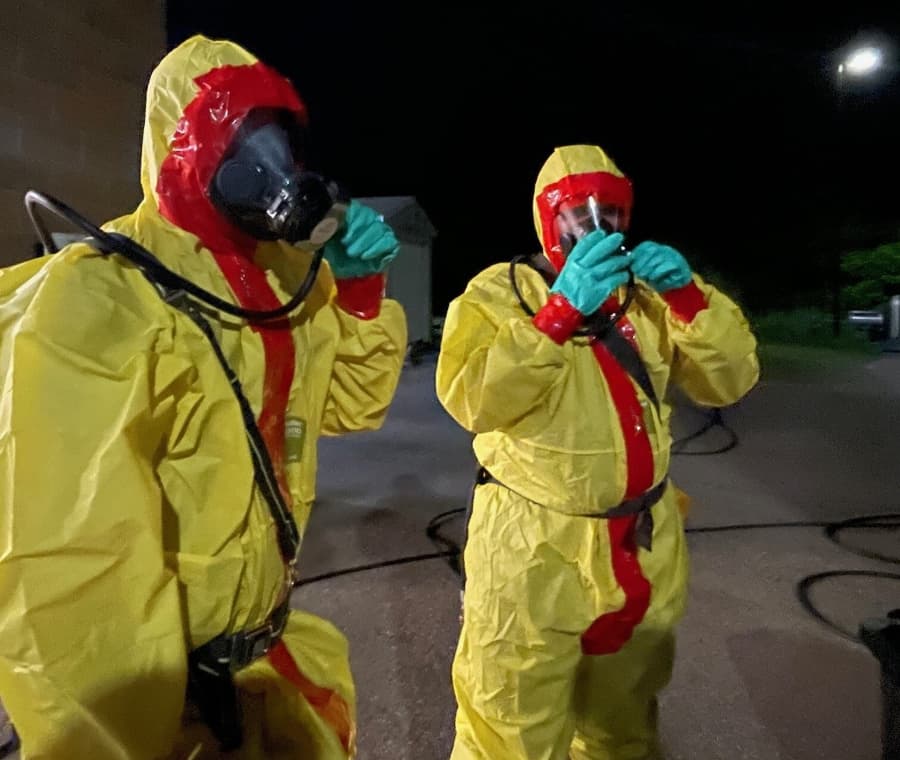
- PPE selection: Workers wear appropriate PPE to the situation, including gloves, boots, respirators, and hazmat suits as necessary.
- Air monitoring: Specialized devices monitor the amount of fumes, airborne particles, and other contaminants in the air, helping us control exposure.
- LOTO: Lockout/Tagout protocols ensure that machinery is shut off, de-powered, and unable to activate while we perform industrial maintenance and cleanup.
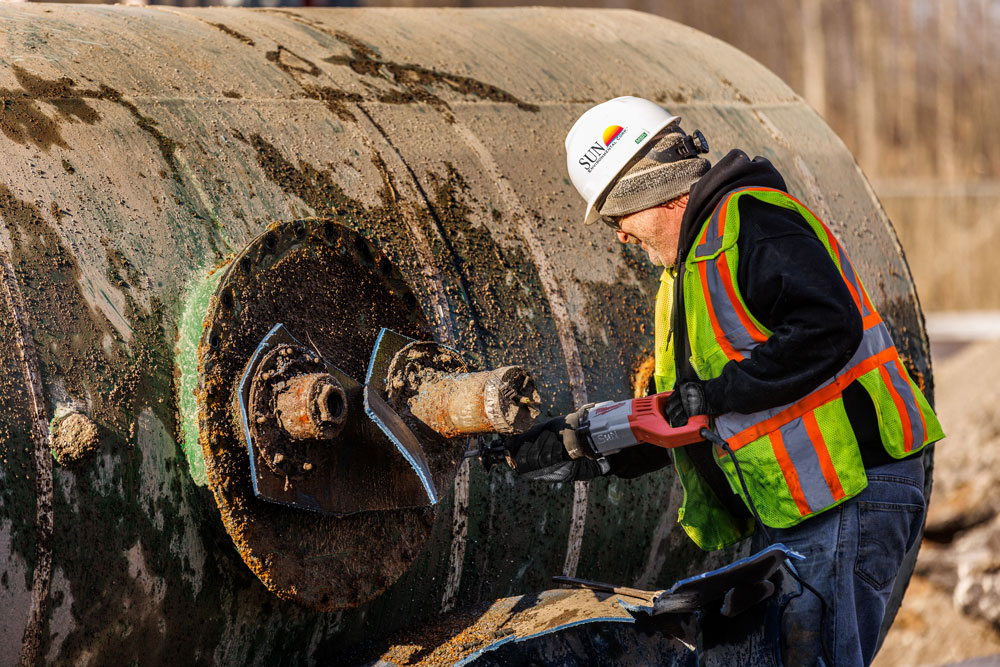
- Confined space: When working in silos, pipelines, and underground storage tanks, we follow confined space protocols to prevent asphyxiation and entrapment.
- Fall protection: Approved harnesses and tie-ins protect employees from falls when working in conditions that involve heights or underground pits.
The combination of safety controls we use will depend on our job hazard analysis (JHA) for your site, with an approach that is tailored to the unique hazards at your site. Most projects will involve one or more of the above controls to ensure that personnel are appropriately protected.
Documentation Clients Should Receive
Detailed documentation is another important aspect of OSHA compliance. It tells you that worksite hazards are being handled appropriately to eliminate or mitigate risk. It also gives you a way to prove that hazards were handled correctly, helping you avoid investigations and fines. Your document packet should include the following:
- Tailgate logs for daily safety meetings
- Detailed and accurate attendance charts
- Equipment inspection and calibration records
- Reports of safety incidents and near-misses
- Waste characterization profiles
- Permits for environmental cleanup
- Permits for hazardous waste transport and disposal
- Documentation of hazardous waste custody
The more thorough your documentation, the better. There is no such thing as too much information when it comes to safety and OSHA compliance. In-depth paperwork from your environmental cleanup contractor indicates that they are taking the appropriate measures to protect your personnel and your company from fines, liability issues, and more.
Find Environmental Consulting Near You in NY, NJ & Philly
OSHA requirements for environmental cleanup are in place to keep your personnel safe. Sun Environmental Corp. is committed to meeting and exceeding OSHA standards at every stage of cleanup, from planning to final documentation. Our environment consulting services are available from locations near you in Syracuse, Rochester, Albany, Buffalo, and Philadelphia, serving Upstate NY and the Greater Philadelphia area. Contact us today to learn more about our safety commitment or to speak with a cleanup specialist. With us it’s not just business, it’s personal.
Frequently Asked Questions About OSHA Requirements
What on-site controls should clients expect (work zones, PPE, air monitoring, permits)?
On-site safety controls will depend on the specifics of your site. Designated work zones, PPE, air monitoring, and permits are minimum requirements. We also perform lockout/tagout protocols, confined space protocols, and fall protection tie-ins where appropriate.
When do HAZWOPER training requirements typically come into play?
HAZWOPER training requirements come into play when cleaning up hazardous material spills. Hazardous materials are anything that is flammable, reactive, toxic, or corrosive, including oil spills and many types of industrial chemicals.
What red flags suggest compliance shortcuts that increase risk and cost?
Common red flags are missing documentation, poorly maintained equipment, inadequate signage and zone control, frequent safety incidents, and incomplete lockout/tagout (LOTO) protocols.