Chemical Spill vs. Oil Spill: What Changes in Response, Reporting, and Cleanup
Chemical spills and oil spills are both environmental disasters that require a prompt response for containment. Because the hazardous materials have different properties, the type of response and reporting involved are different. Sun Environmental Corp. offers environmental services from locations near you in Syracuse, Rochester, Albany, Buffalo, and Philadelphia. We are proud to serve many areas across Upstate New York including Central, Western, North Country, the Southern Tier and Capital Region, and in Pennsylvania we cover the greater Philadelphia region, including parts of New Jersey.
Here, we discuss the differences between chemical spill cleanup and oil cleanup to demonstrate how we tailor our emergency response to the situation.
Key Takeaways
- When reporting an oil or chemical spill, provide detailed information about the time, location, type, and amount of material spilled, hazards, and media impacted.
- Following the appropriate chemical and oil handling guidelines can help prevent spills or reduce their severity. This includes developing a spill response plan.
- Contact specialized response as soon as you evacuate and contain the site. Professional remediation is necessary to ensure that spills are safely cleaned up.
Why “Chemical vs. Oil” Changes the Playbook
Oil spills involve fuels, lubricants, diesel, and other hydrocarbons. These substances have specific shared properties: they float on water, spread quickly across hard surfaces, create slip risks, and are often flammable. These commonalities allow our cleanup crew to treat most spills similarly.
Chemical spills, on the other hand, are more complex. Hazardous chemicals come with a variety of characteristics and behaviors. Corrosive acids, alkali, solvents, and toxic liquids each have different properties and present unique hazards that make cleanup difficult or dangerous. Hazards of chemical cleanup may include:
- Harmful vapors
- Reactivity with other substances
- Chronic poisoning
- Organ damage
- Chemical burns
Cleaning up a chemical spill, therefore, requires tailoring our response to the properties of the chemicals present. We must employ specific absorbents, PPE, and waste handling techniques to keep our people and yours safe while addressing the spill.
First Response Steps for Any Spill
Your first response should be the same for any spill: protect personnel, isolate the spill, and contain its release. Here is a step-by-step emergency response guide for oil and chemical spills:
- Evacuate: Evacuate all personnel from the spill site. Use safety showers and eye washes to clear contamination and provide emergency medical assistance as needed.
- Stop: Cut off the source of the spill, if possible. Remove and seal drums, turn off machinery, and prevent more hazardous materials from being released.
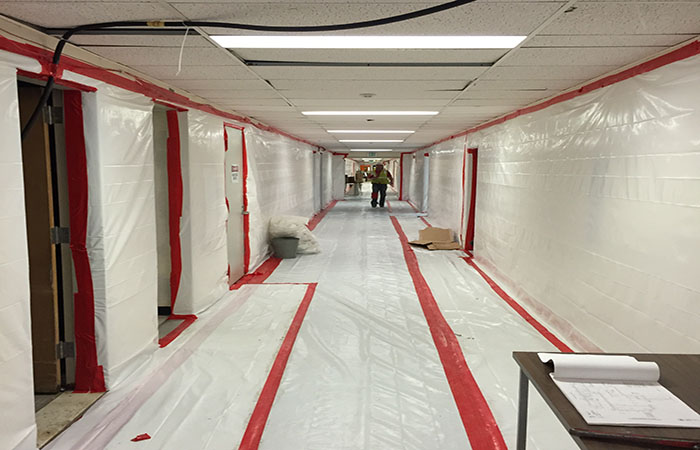
- Contain: Isolate and confine the spill area by closing doors, sealing drains, and placing barriers. Keep the spill from spreading further, especially into drains and waterways. Sun Environmental Corp. offers spill kits that can help with containment until their teams arrive.
- Secure: Use signage to clearly indicate that the spill area is dangerous. Make sure all potential entrances into the area are blocked off to prevent entry.
Finally, you need to alert local authorities and emergency services to the spill. Provide as much detail as possible about the spill. The more information you give, the faster and more effectively responders can address your concerns. Details to provide include:
- What material or materials were spilled
- How much material was spilled
- Where the spill is located
- What the potential dangers are (reactivity, toxicity, etc.)
- Whether any staff members were injured
This information should be provided to all relevant services and authorities, including hospitals, fire departments, police, state environmental officials and your remediation contractor.
Oil Spill Cleanup Basics
Because most types of oil behave similarly, oil spills can usually be addressed with similar tactics. Oil spills impact the environment in three main ways: they spread quickly across smooth surfaces, soak into soil, and float on water. Cleanup starts by identifying which media have been impacted and employing the appropriate tools for remediation:
- On surfaces: Oil on smooth surfaces is manually removed using rakes, shovels, pans, brooms, and other hand tools. We may also use high-pressure water blasting.
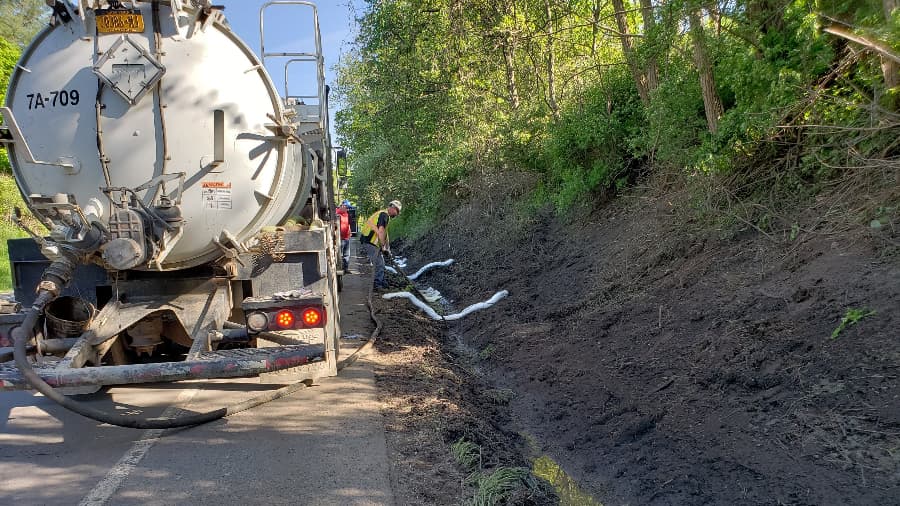
- In soil: Oil in soil can be recovered using vacuum trucks. Larger spills may require heavy machinery such as backhoes and front loaders to remove contaminated soil.
- On water: Oil booms are floating barriers deployed to keep oil from spreading. We then spread hydrophobic materials that absorb the oil, allowing for easy recovery.
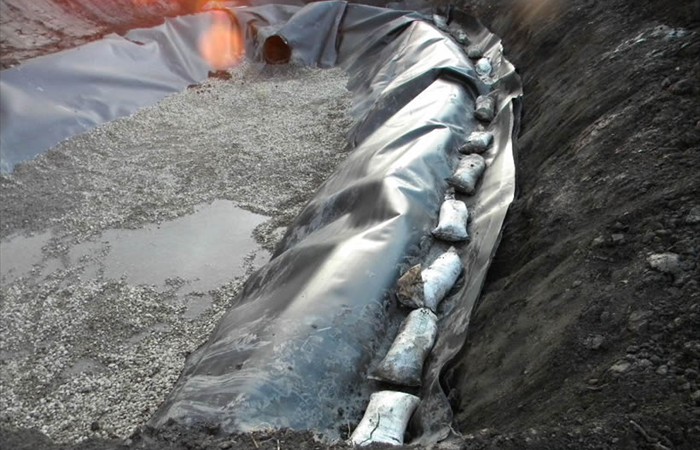
After collecting the spilled material, we transport it to a disposal site. Secure landfills can bury oil waste to prevent it from dispersing. Sand, gravel, and debris may be washed using heavy machinery and solvents to recover the spilled oil. Other waste may be incinerated to produce sustainable energy.
Chemical Spill Cleanup Basics
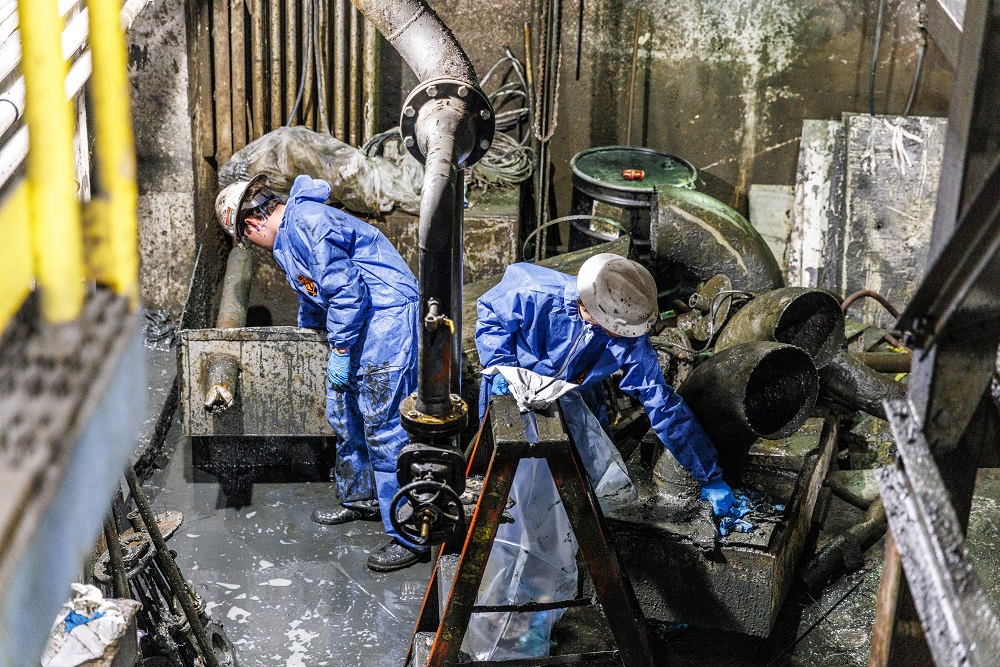
Because hazardous chemicals can present a variety of dangers, our response must be specific to the situation. We begin by evaluating the chemicals present and determining what hazards must be addressed. Our team wears the correct personal protective equipment (PPE) while performing the following remediation steps:
- Neutralization: If the chemical is reactive to air or water, then we start by applying a neutralizing agent that will eliminate reactivity.
- Removal: After the chemical is neutralized, we collect and remove it using absorbent materials, manual removal, heavy machinery, or vacuum trucks.
- Disposal: Chemical waste is disposed of following regulations. Methods include recycling, chemical treatment, biological treatment, incineration, or secure landfilling.
- Verification: We perform thorough soil and water testing to ensure that the spill has been fully removed and no contamination remains.
If multiple types of chemicals were spilled, they may be incompatible with each other. Incompatible wastes require multiple neutralization, removal, and management strategies to prevent dangerous reactions.
Reporting and Documentation
Finally, we perform thorough documentation of the spill and remediation. Complete and accurate documentation is essential to demonstrate your compliance with EPA standards and avoid fines. Cleanup documents should include:
- The time and date of the initial spill report
- The responsible party and remediation partner(s)
- The site coordinates, dimensions, and impacted media
- Photographic evidence of the spill, cleanup, and final conditions
- Manifests for oil waste transportation and disposal
- Records of soil and water samples to show contaminant levels
The finished report should be presented to the federal, state, and local agencies responsible for environmental oversight. Preserve a copy for your own records as well. You may need to provide further reports a few weeks, months, or years later to demonstrate that the spill was properly handled to prevent long-term contamination.
Find Professional Chemical and Oil Spill Cleanup Near You in NY, NJ & Philly
When the unexpected occurs, understanding the nature of your spill is crucial to preparing an appropriate cleanup. Sun Environmental Corp. performs chemical spill cleanup and oil spill cleanup with convenient locations near you in Syracuse, Rochester, Albany, Buffalo, and Philadelphia, serving Upstate NY and the Greater Philadelphia area. Contact us today or call 1-800-80-SPILL to learn more about our services or to get assistance with environmental consulting and remediation. With us it’s not just business, it’s personal.
Frequently Asked Questions About Chemical Spill Cleanup and Oil Cleanup
What immediate response steps are the same for chemical and oil spills, and what steps differ?
Both chemical and oil spills require immediate evacuation, site containment, and detailed reporting. With chemical spills, you must take extra steps to document the exact chemicals that were spilled and the hazards they present (i.e., reactivity, corrosivity, vapors).
How do hazards change (vapors, reactivity, compatibility) between chemical and oil spills?
Oil spills cause hazards including toxic vapors, chemical burns, flammability, and water contamination. Chemical spills can have the same hazards but may also be corrosive or reactive with air or water.
How do cleanup methods and waste disposal pathways differ for chemical vs. oil releases?
Cleanup methods for oil spills involve absorbing and removing the oil. The removed material may be washed for oil recovery, secured in a landfill, or incinerated. Cleanup methods for chemical spills are tailored to the specific chemical and may require neutralization before removal. Options for disposal include recycling, chemical treatment, biological treatment, incineration, or secure landfilling, depending on the chemical type.